

Opening Keynote

Jessica Bantom
Associate IIDA, NOMA, CCMP
Global Leader of Equity, Diversity, and Belonging,
Principal at DLR Group
Closing Keynote

Evelyn Lee
FAIA, NOMA, 2025 AIA President
Architect, Disruptor, Angel Investor, Startup Advisor Founder, Practice of Architecture, Co-Host: Practice Disrupted
Sessions
Sustainability
1LU | HSW Approved
Session Description:
While the connection between the built environment and human wellbeing is widely recognized, the impact of specific design features and choices on wellbeing is less understood. This presentation will introduce ongoing interdisciplinary research aimed at increasing this understanding through innovative physical and virtual reality experiments, design tools and interventions, and addressing societal needs. Attendees will learn about the findings of two projects: one that leverages smart building technologies and human-centered design principles to enhance occupant well-being in office settings and to support aging-in-place in residential settings, and one that supports methods to identify forced labor and environmental harm in building material supply chains.
Speaker:

Professor Sarah L. Billington, PhD
Senior Fellow, Woods Institute for the Environment
Professor Billington’s research program focuses on the impact of sustainable building design and materials on human wellbeing. This work includes developing design tools to quantify nature experience in buildings, understanding and increasing wellbeing in and through affordable housing, and identifying the risk of forced labor in building material supply chains through fingerprinting and AI methods. The goal of her research program is to provide building occupants, designers, and owners tools to achieve built environments that meet their needs for environmental and social sustainability and to design interventions that support human wellbeing over time while preserving privacy.
Session Description:
The California Building Code now requires embodied carbon reduction measures for buildings over 50,000sf. When building reuse is not an option – and even when it is, attention to building systems and material selections can yield lower carbon buildings. The most effective decarbonization initiatives require collective action from multiple stakeholders.
This session will explore how interdisciplinary collaboration can enable more effective and deeper decarbonization, discuss an on-going research project that is quantifying the implementation costs and greenhouse gas (GHG) reduction potential of various strategies, and review how design strategies can be used to reduce the reliance on finite resources and high impact materials.
We will explore how various decarbonization strategies can be incorporated into daily practice to support the decarbonization of our built environment.
Speaker:
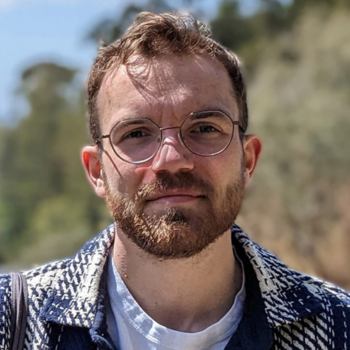
Matt Roberts, PhD
Assistant Professional Researcher
Center for the Built Environment
Matt Roberts is an Assistant Professional Researcher at the Center for the Built Environment at UC Berkeley. Matt’s research efforts focus on the advancement of life cycle assessment (LCA) methodology for material to building scale applications within the built environment. His current interests include the use of consequential LCA to assess changes in environmental impacts that result from implementing impact reduction strategies at scale and the development of target values to broaden the scope of sustainability. He received his PhD in Architecture and Civil Engineering, and a MSc in Conservation of Historic Buildings from the University of Bath, UK and BASc in Civil Engineering and International Studies in Engineering from the University of Waterloo, Canada. His PhD research focused on LCA and net-zero carbon building design. Previous research has included the LCA of ‘Active’ buildings with on-site energy storage and on-site energy generation that are capable of responding to the grid and LCAs for bio-based building materials intended for use in circular economy applications within the built environment.
1 LU Approved
Session Description:
As buildings transition away from gas, rising electricity bills are creating real resistance from homeowners and residents. Heat pumps are a critical tool, but how they operate matters as much as whether they are installed. This session explores how thermal energy storage changes the equation by decoupling heat pump operation from heat delivery to shift loads away from expensive, grid-stressed peak hours.
Through real-world case studies spanning single-family and multifamily retrofits, attendees will learn how to evaluate load management strategies, navigate the incentive landscape and apply thermal storage design criteria in their own projects. The result: lower bills, fewer emissions, and buildings that strengthen rather than strain the grid.
Speaker:

Dr. Jane Melia
Founder and Chief Revenue Officer
Harvest
Jane Melia is the co-founder and Chief Revenue Officer of Harvest Thermal”, a company revolutionizing home heating and hot water systems with its innovative Smart Thermal Battery™. Jane has been instrumental in driving Harvest’s growth, transitioning it from R&D to commercialization, and achieving significant milestones like cutting emissions by over 90% and reducing customer bills by 30%. With over two decades of experience in climate tech and deep-tech startups, Jane combines her technical expertise—rooted in a Ph.D. in Fluid Mechanics from Cambridge University—with a relentless passion for decarbonizing the built environment.
Practice
Session Description:
As architecture firms navigate renewed return-to-office pressures alongside rapid technological change, the question: Where should our teams work? continues to emerge as one of the biggest challenges.
Architects FORA reframed the conversation by focusing on a more fundamental challenge: how do we design a practice that functions now and into the future, regardless of location?
In the context of today’s dominant firm models—in-person, hybrid, and fully distributed— Architects FORA will share insights into the practice system their firm has developed to operate fully remotely. Grounded in transparency, adaptability, clear expectations, and trust-based leadership, this system is designed to support mentorship, accountability, culture, and performance without relying on physical proximity.
Rather than positioning remote work as the goal, this session leverages it as a stress test—revealing where traditional approaches rely on implicit knowledge, informal access, and proximity-based management, and where more explicit, durable systems can strengthen practice overall. Many of the structures developed to support remote teams—clear documentation, intentional feedback loops, distributed knowledge sharing, and evolving leadership roles—are increasingly relevant across all firm models as AI reshapes how work is produced, evaluated, and coordinated.
The session will conclude with an invitation to firm leaders to think like designers of practice. As technology changes accelerate and uncertainty becomes a defining condition, the most important question is no longer where work happens, but whether a firm’s systems are actually built to support the people and responsibilities they carry. Future-ready practices will be those designed with intention, resilience, and clarity, regardless of location.
Speakers:

Leah Alissa Bayer, AIA, NOMA, NCARB
President
Architects FORA
Leah Alissa Bayer, AIA, NOMA, NCARB, is President of Architects FORA, a 100% women-owned, 100% virtual, mid-sized architecture firm that specializes in affordable housing, community engagement, and research. At the vanguard of progressive business practice, Leah designs systems and teams that are radically transparent, equitable, and healthy, which then carries into the work that FORA creates. Prior to FORA, Leah founded a virtual firm with an award-winning business plan, EVIA Studio, that she grew and merged with 40 year old legacy firm, OJK, to become FORA.
An alumnus of Cal Poly, SLO, Leah first studied engineering then graduated with a B.Arch and Fine Arts Minor. An AIA CA Young Architect Award recipient, keynote speaker, and volunteer leader focused on EDI and Practice for over a decade, her recent service includes the AIA Strategic Council, AIA Governance Task Force, AIA California Board, AIA Silicon Valley Past President, NCARB’s Futures Collaborative, and the Whatcom Housing Alliance Steering Committee.
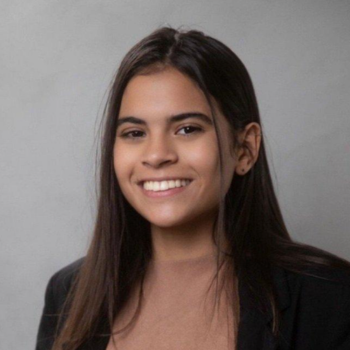
Gabriella Vaz de Freitas, Assoc. AIA
Designer and Technology Lead
Architects FORA
Born and raised in Brazil, Gabi is a designer at Architects FORA who believes secure housing can change lives. Gabi moved to California to study architecture at Cal Poly San Luis Obispo, and her path took a defining turn after winning the FORAship and joining the team full-time. Along the way, she studied urban futures in the Institute of Advanced Architecture of Catalunya in Barcelona and affordable housing in San Francisco. She’s driven by a mission to make thoughtful, equitable design feel clear, accessible, and real. These days, she’s excited about bridging emerging AI technology with human-centered design while she plans her next trip around architecture, food, and curiosity.
Session Description:
The Evolution of Practice is a dynamic, provocative panel discussion exploring how architects, designers and advocates of the built environment balance the timeless need for human-centric design with the transformative power of AI. At a time when artificial intelligence is rapidly reshaping how architecture is practiced, this session asks: Will we lead this transformation or will in overtake our purpose and impact? Co-presenters Rosa T. Sheng, FAIA and Jacqueline Zuhoski, AIA bring complementary perspectives to the topic. Rosa – a longstanding champion for equity and human-centered practice – will discuss the importance of prioritizing human engagement, propinquity (the power of physical closeness), and purposeful connection in the spaces we design. Jacqueline – a Technical Director and design resilience leader known for innovative approaches that streamline project delivery while maintaining design craft and performance – will share how emerging technologies like AI can be harnessed to enhance creativity and efficiency without sacrificing the human touch.
Moderator:

Jane Wan, AIA, NCARB
Project Manager
AECOM
Jane is a licensed architect with over a decade of experience delivering complex, cross-sector projects. Her work spans aviation, advanced manufacturing, civic facilities, and private residences, ranging from strategic planning through detailed design and project delivery.
Actively engaged in the profession, she serves as a Director at AIA Silicon Valley, a Subject Matter Expert for the California Architects Board, and an NCARB Committee Member. Her projects have received awards from AIA California and have been featured in Metropolis magazine.
Speakers:

Rosa Sheng, FAIA
Vice President, Higher Education Studio Leader, Director JEDI
SmithGroup
As SmithGroup’s Director of Justice, Equity, Diversity & Inclusion and Higher Education Studio Leader for San Francisco, Rosa hasn’t been afraid to speak her mind throughout her career. As the Founding Chair of Equity by Design, a national movement created by the American Institute of Architects San Francisco Chapter to advocate for equitable practices and pay in architecture, she has continued to speak up regarding professional issues that move her. Whether Rosa is leading the profession into new and just directions in practice or project work, she is a strong, hands-on designer and project manager with an ability to build consensus and solve complex problems for a diverse range of clients.

Jacqueline Zuhoski, AIA, LEED AP ID+C, Fitwel Ambassador
Principal, Technical Director
Gensler
Jacqueline is a Principal at Genlser. Throughout her 25 years of experience she has developed a reputation for delivering complex architectural and interior projects across tech workplace, food & beverage, professional services, and fitness sectors. As a Technical Director and sustainable design leader, she is known for her innovative approaches that streamline project delivery while maintaining craft and performance. Her collaborative style and deep technical expertise have shaped impactful environments for global brands including Adobe, Google, Synopsys, and SJSU. Jacqueline is an AIA member, Fitwel Ambassador, and LEED ID+C accredited professional.
1 LU Pending Approval
Session Description:
Artificial intelligence is beginning to reshape how projects are analyzed, designed, and delivered across the AEC industry. As these tools move into everyday practice, they are opening up new possibilities for efficiency, exploration, and decision-making.
Bringing together perspectives from engineering and architecture, this session will examine how AI is being applied today, where it’s adding value, and how it may influence the future of design practice.
Moderator:

Meghna Majethiya, LEED AP BD+C
Architect, Design Coordinator II
LPA Inc
Meghna Majethiya is an architect at LPA with experience across a range of project types, including civic, healthcare, and higher education work. She contributes to projects through multiple phases, supporting both design and delivery with a focus on integrated, well-coordinated outcomes.
She holds a Master of Architecture from the University of Illinois at Urbana-Champaign. Her interests include sustainable design and high-performance buildings, and she values collaboration, curiosity, and a thoughtful approach to advancing project outcomes.
Speakers:

Chukwuma Ekwueme, PhD, PE, SE, LEED AP
Principal
Thornton Tomasetti
Dr. Chukwuma Ekwueme has extensive experience in the analysis, design and retrofitting of diverse structural systems, including concrete and masonry construction, steel and aluminum structures, and light-frame wood buildings. He specializes in earthquake-resistant design and performance-based solutions, leveraging technologies such as base isolation, supplemental damping, and fiber-reinforced composites. His work also focuses on applying artificial intelligence to structural engineering—automating analysis and design workflows, enhancing performance prediction, and improving decision-making using data-driven models. Dr. Ekwueme also lectures in the UCLA Department of Civil Engineering, teaching courses on reinforced concrete and masonry design.

Adam Nakagoshi
Senior Associate, Regional Design Technology Director | Northwest
Gensler
As the Regional Design Technology Director for Gensler’s Northwest Region, Adam has a strong commitment to working closely with our clients and partners. He leads a multifaceted community of Design Technology leaders to anticipate the needs of the industry and build solutions that provoke curiosity, inspire change, and deliver innovation.
He is passionate about human connectivity, research, and building project-validated design solutions. Leveraging the endless possibilities of design thinking and digital computing, he works to bridge the gaps between design concept, visualization, and realization. He believes that a partnership with clients and designers will foster a new era of design centered around the human experience in our cities and communities.
He guides the research and development, application for project use, and the implementation of the technology into the design process for teams throughout the region. His clients include NVIDIA, San Francisco International Airport, and the City of San Jose.
Adam holds a Masters in Architecture from the University of South Florida.
Inspiration
1 LU Approved
Session Description:
In 2025, LPA Design Studios was recognized with AIA Architecture Firm Award as a “trailblazer in sustainable, high-performance architecture.” This interactive session will feature a panel of LPA leaders exploring the development of a culture of shared responsibility that breaks down barriers between disciplines to address the biggest issues of our time. Through case studies, personal perspectives and audience participation, the session will highlight the ability of a “No Excuses” mindset to cut carbon emissions on every project, for every budget, at every scale.
Speakers:

Wendy Rogers, FAIA, LEED AP
Chief Executive Officer / Chief Talent Officer
LPA
Wendy Rogers is CEO and Chief Talent Officer of LPA Design Studios, where she leads an interdisciplinary team of more than 400 architects, designers and engineers advancing a collaborative, research-driven approach to the built environment. Under her leadership, LPA has become a national leader in sustainable, high-performance design and was honored with the 2025 AIA Architecture Firm Award, cementing its role as an industry leader driven by innovative, mission-driven, integrated design.
Wendy began her career at LPA as an intern and was named CEO in 2017. She oversees firm operations while expanding the role of LPA’s Sustainability and Applied Research unit, and cultivating a transparent, people-centered culture. As Chief Talent Officer, she is focused on attracting and developing professionals committed to making meaningful impact.
A leading voice in sustainable design, Wendy advocates for research-backed strategies that make energy performance a priority on every project. She frequently speaks on designing environmentally responsible, human experiences. A graduate of California Polytechnic State University, Wendy is a LEED Accredited Professional and a Fellow of the AIA.
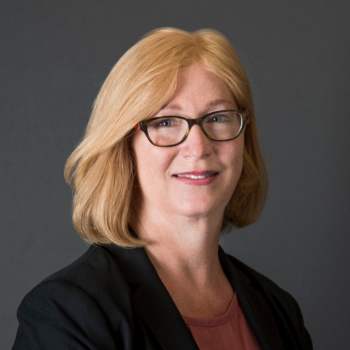
Helen Pierce, AIA
Design Director
LPA
Helen Pierce is a Design Director at LPA Design Studios with over 30 years of experience shaping innovative projects for community and educational clients. Her work is grounded in research and a deep understanding of placemaking, resulting in thoughtful, high-performing environments that uplift communities.
Helen has led a wide range of sustainable projects, including off-grid, net-zero and LEED-certified Platinum facilities. Known for her collaborative leadership style, she brings clarity and cohesion to complex projects with diverse stakeholder needs.
An active member of the San Francisco Bay Area Planning and Urban Research Association (SPUR), Helen is passionate about the role of design in strengthening communities. She has taught, lectured and served as a juror throughout her career, with work published and exhibited internationally.
Originally trained in engineering, she earned her architecture degree from Drexel University. She has won top honors from design competitions, including over 20 local, state and regional AIA design awards for a variety of project types such as higher education, K-12, sport and recreation, civic, cultural, retail and corporate.

Ellen Mitchell, AIA, LEED AP BD+C, WELL AP, SEED
Director of Sustainability and Applied Research
LPA
Ellen Mitchell is a nationally recognized leader in advancing high-performance, equitable and resilient design. She leads an interdisciplinary team focused on translating research into actionable strategies that inform design and improve outcomes across projects.
A licensed architect, Ellen has dedicated her career to integrating sustainability across diverse building types and budgets, overseeing more than $4 billion in projects pursuing LEED and other certifications. She champions a holistic approach that prioritizes performance, wellness, user experience and community impact.
Ellen is a strong advocate for public-interest design, having led initiatives delivering gratis and reduced-fee work for underserved communities — from a net-zero maternity ward in Uganda to urban food infrastructure in Washington, D.C.
She is a regular speaker on carbon reduction, design culture and social impact, and serves on multiple national AIA committees focused on climate action and design excellence. She volunteers with several groups, including the AIA National Framework for Design Excellence Task Group, AIA National COTE Sub-Committee on Climate Action and Climate Justice and the Large Firm Round Table Sustainability Group Executive Committee.

Bryan Seamer, SE, LEED Green Associate
Director of Structural Engineering
LPA
Bryan Seamer leads the design of resilient, high-performing structural systems for a wide range of building types. With over 20 years of experience, his work spans new construction, seismic evaluation and the rehabilitation of existing and historic structures.
Bryan is known for translating complex engineering challenges into clear, actionable solutions that support collaboration across integrated design teams. He is involved in all phases of a project, ensuring structural systems are safe, durable, efficient and constructible.
His work on projects, such as the Christ Cathedral Tower of Hope, demonstrates how interdisciplinary design can preserve historic character while significantly improving seismic performance. Following the 2010 earthquake in Haiti, Bryan contributed to rebuilding efforts — an experience that continues to inform his approach to resilient design.
After receiving his Bachelor of Science in Civil Engineering from the University of Southern California, Bryan received his Master of Science in Structural Engineering from California State University, Long Beach. He is a licensed engineer in multiple states and a LEED Green Associate.
1 LU Pending Approval
Session Description:
Great design deserves great storytelling. In this hands-on workshop, Gina Grahame shows you how to move beyond process-heavy explanations and bring your ideas to life. Learn a powerful “Design Story” framework and the key elements of Executive Presence to develop your own unique voice and style. Through real-world examples, actionable tips, and interactive practice, you’ll leave with greater confidence, a stronger presence, and the know-how to be a more compelling presenter and leader.
Speaker:

Gina Grahame
CEO of Authentacious Leadership
Communication Coach and guest educator at Stanford Graduate School of Business
Gina Grahame is the CEO of Authentacious Leadership, an executive communication coach, and a former lecturer at the Stanford Graduate School of Business. Through her work with organizations such as the Google School of Leadership, Gina helps high-performing professionals worldwide develop their unique voice and leadership style. Gina has guided thousands of leaders on their journey to the V- and C-suite—empowering them to communicate with (a) clarity, confidence, and authenticity, (b) greater influence, confidence, and presence. #BeAuthentacious
1 LU | HSW Approved
Session Description:
The San Francisco-based studio, FUTUREFORMS, co-founded by Jason Kelly Johnson and Nataly Gattegno, operates at the intersection of art, architecture and technology. This pioneering practice investigates how public projects can shape shared spaces—creating moments of exchange, reflection, and connection. Each site-specific installation offers a distinct spatial and material experience, contributing to the identity of a place while fostering meaningful forms of community participation.
This session, led by Jason Kelly Johnson, explores Futureforms’ creative and collaborative process over the last 10 years. The talk is structured like a studio visit, sharing process images and videos, presented alongside more finished work. The session will share how the firm’s practice brings together knowledge and tools from multiple disciplines—art, architecture, computational design, and more.
Johnson was educated at the University of Virginia and Princeton University. In addition to leading Futureforms, he has taught at leading schools of architecture and art including the California College of the Arts (CCA), Cornell University and the University of Pennsylvania. Johnson is the founding director of CCA’s Digital Craft Lab, and he is a Board Member at the Museum of Craft and Design in San Francisco.
Speaker:
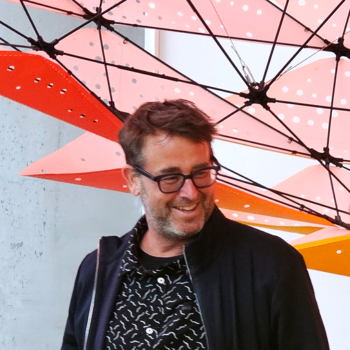
Jason Kelly Johnson
Co-founder, Lead Artist and Design Principal, FUTUREFORMS
Professor at the California College of the Arts, Architecture Program
Lead artist and founding partner of FUTUREFORMS. He brings an expertise in computational design and advanced digital fabrication, produced through the lens of critical art production and public space advocacy. Jason was born and raised in Canada. He received a Bachelor of Science from the University of Virginia, and a Master of Architecture from Princeton University. Johnson is currently a full Professor at the California College of the Arts in San Francisco, CA. where he is the Founding Director of the CCA Digital Craft Lab. He also serves on the board of the Museum of Craft & Design.